
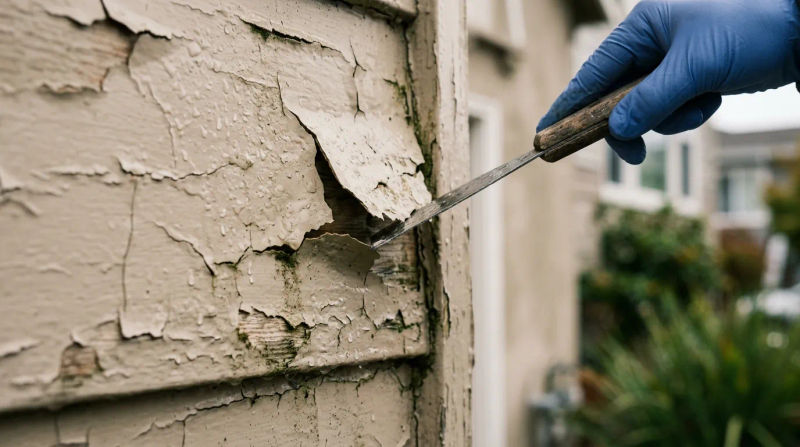
You pull into your driveway on a crisp fall evening and something about your home’s exterior just looks… tired. That vibrant color you loved now seems a bit dull, and as you get closer, you notice a few small flakes of paint on the porch. With the first October rains just around the corner here in Richmond, it’s easy to dismiss these little things. But as a handyman who has worked on Bay Area homes for over 12 years, I can tell you that small signs of exterior paint failure are often the first warnings of bigger problems to come, especially with our damp, foggy climate.
That constant marine air we get in Richmond leaves surfaces damp for long periods, creating the perfect environment for paint to break down. What starts as a tiny blister or a small patch of peeling can quickly spread once the winter wet season sets in. Taking a few minutes to inspect your home’s exterior now can save you from much more extensive and costly repairs down the road.
Common Signs and Symptoms
Knowing what to look for is the first step. Paint doesn’t always fail in a dramatic, obvious way. Often, the signs are subtle at first. Here’s what my team and I look for when we’re assessing a home’s exterior.
- Peeling, Flaking, or Chipping: This is the most classic sign. You might see small flakes on the ground near your siding or notice larger sections curling away from the surface. These are clear signs of peeling paint Richmond homeowners should never ignore. It means moisture has gotten underneath the paint film, breaking its bond with the surface below.
- Blistering or Bubbling: Do you see bubbles or blisters forming on your siding or trim? This is almost always caused by moisture or heat. A blister is essentially a pocket of trapped water or air pushing the paint away from the wall. In our area, this is often due to rain getting behind the paint through a tiny crack or painting over a surface that wasn't completely dry.
- Visible Mildew or Mold: This is a huge issue in our foggy climate. If you're wondering how to spot paint mildew on trim, look for black, gray, or even greenish splotches that look like dirt but can't be easily wiped away. It thrives in damp, shaded areas, so pay close attention to the north side of your house, under eaves, and around window frames where moisture lingers.
- “Chalking” Residue: Run your hand over your siding. Does a fine, chalky powder come off on your fingers? This is called chalking, and it happens when the paint’s binder is broken down by sun and weather exposure. While a small amount of chalking is normal as paint ages, excessive chalking means the paint film has eroded and is no longer protecting your home.
- Cracking or “Alligatoring”: This type of failure looks just like it sounds - a pattern of cracks resembling the scales on an alligator's back. This usually indicates that the paint has become brittle with age and can no longer expand and contract with the temperature changes. It can also happen when a hard topcoat is applied over a softer, more flexible primer or base coat.
- Fading and Color Degradation: While all paint fades over time due to UV exposure, rapid or uneven fading can be a sign of a low-quality paint job. The side of your home that gets the most direct sun will naturally fade faster, but if the color is washing out prematurely, the paint is no longer providing adequate protection.
What Causes This Problem
Identifying the symptoms is one thing, but understanding the root cause is key to a lasting fix. Simply scraping off peeling paint and covering it up will only lead to the same problem recurring in a year or two. Here are the main culprits I see.
Moisture Intrusion: This is, without a doubt, the number one enemy of exterior paint in the Bay Area. Richmond’s fog and winter rains mean our homes are constantly battling dampness. Water can get behind your paint in several ways:
- Through unsealed gaps in siding, windows, or door frames.
- From clogged gutters that overflow and run down walls.
- From moisture wicking up from the ground into the base of your siding.
- From interior moisture (like from a bathroom without a fan) passing through the wall.
Inadequate Surface Preparation: A paint job is only as good as the surface it’s applied to. I’ve seen countless paint jobs fail because the surface wasn’t properly prepared. This includes failing to clean off dirt and mildew, not scraping away all the loose and peeling paint, or skipping the crucial step of priming bare wood or repaired areas. The paint simply can't get a solid grip on a dirty or unstable surface.
Age and Environmental Wear: Exterior paint has a finite lifespan, typically 5-10 years, depending on the quality of the paint and the conditions. Over time, UV radiation from the sun breaks down the paint’s binders, making it brittle and weak. Our salty marine air can also accelerate this process.
Building Era Considerations: Many homes in Richmond are charming bungalows and cottages built in the 1940s. These post-war homes often have original wood siding. While beautiful and durable, this wood requires diligent maintenance. If the paint film is compromised, that wood siding can absorb moisture, causing it to swell and making the blistering exterior paint causes even more pronounced. Furthermore, homes from this era may have layers of old, oil-based paint, which can become brittle and cause newer latex paints to crack if not prepped correctly.
Using the Wrong Type of Paint: Not all paints are created equal. Using an interior-grade paint on an exterior surface is a recipe for rapid failure. It simply doesn't have the flexibility or mildewcides needed to withstand the elements. Even among exterior paints, using a low-quality product is a false economy that will lead to a much shorter lifespan.
When to Call a Professional
Some homeowners are avid DIYers, and I respect that. But it's important to know when a project is beyond a simple weekend fix.
You might be able to handle a very small, isolated area of peeling on a single piece of siding if you're comfortable with the multi-step process: scraping, sanding, cleaning, priming, and painting. However, you should seriously consider calling for experienced help if you encounter any of the following:
- Widespread Failure: If you see peeling, blistering, or mildew on multiple walls or large sections, this indicates a systemic issue that a simple touch-up won't solve. The entire surface likely needs to be prepped and repainted.
- Lead Paint Concerns: If your home was built before 1978 - which includes the vast majority of 1940s-era homes in Richmond - there is a high probability of lead-based paint being present. Disturbing this paint without proper containment and safety procedures is hazardous. Professionals are trained and equipped to handle lead paint safely.
- Working at Heights: If the problem areas are on the second story or require tall ladders, safety becomes a major concern. Experienced professionals have the right safety gear and are insured for this type of work.
- Uncertainty About the Cause: If you can't determine why the paint is failing, you risk fixing the symptom but not the problem. A professional can diagnose whether the issue is just old paint or a sign of a deeper problem like a leak or poor ventilation.
My team and I have the specialized equipment, like pressure washers and paint sprayers, and the experience to do the job safely, efficiently, and correctly the first time. A full exterior repaint is a significant undertaking, and a professional can ensure a beautiful, long-lasting result that truly protects your home.
Conclusion
Your home’s paint is its first line of defense against the elements. Here in Richmond, that means standing up to a lot of moisture. Paying attention to the early warning signs like minor peeling, chalking, or small blisters can make a huge difference. Addressing these issues in the fall, before the winter rains arrive in full force, can prevent minor blemishes from turning into major water damage and rot.
Take a walk around your property this weekend. Look closely at your trim, your siding, and under the eaves. Don't let a small problem today become a big, expensive headache next spring.
If you notice any of these signs of exterior paint failure, contact a local handyman professional for an inspection. They can help you understand the severity of the problem and recommend the best course of action to protect your home.